Research Brief
Recently, Researcher Li Yu and Assistant Researcher Weimin Kuang from Yunnan University conducted a systematic study on 309 screened fecal samples of Yunnan snub-nosed monkeys using hybrid capture sequencing technology. They successfully reconstructed the finest population genetic structure of this species to date and clarified its evolutionary history, laying a solid scientific foundation for targeted species conservation. The relevant findings have been published in the international journal Molecular Biology and Evolution.
iGeneTech is honored to provide probe synthesis, library construction and sequencing services for this research.
Research Background
In the field of wildlife conservation research, non-invasive sampling and precise sequencing serve as core prerequisites for evidence-based conservation. As easily accessible and non-destructive research materials, fecal samples are widely adopted in genetic studies of rare and endangered species. Nevertheless, fecal DNA is frequently plagued by degradation and impurity interference. Hybrid capture sequencing technology, featuring high efficiency and high accuracy, has emerged as a critical solution to address such challenges.
Research Framework
The research team took Yunnan snub-nosed monkeys as the research subject and extensively collected fecal samples from wild natural populations. After unified nucleic acid extraction, a hybrid capture strategy was applied to enrich 54,892 autosomal SNP loci presumed to evolve neutrally. Combined with population genomics and landscape genetic analyses, the team systematically clarified population differentiation characteristics, impacts of geographic isolation and evolutionary patterns of the species, and proposed multiple conservation and management strategies.
Key Research Findings
Through phylogenetic reconstruction, principal component analysis (PCA), admixture analysis and other methods, this study identified five genetically distinct populations with clear geographic isolation, namely the Southwest, Southeast, Central, North-Central and Northern populations. The research also uncovered previously unrecognized novel subpopulation structures, which are primarily associated with landscape fragmentation caused by human activities.
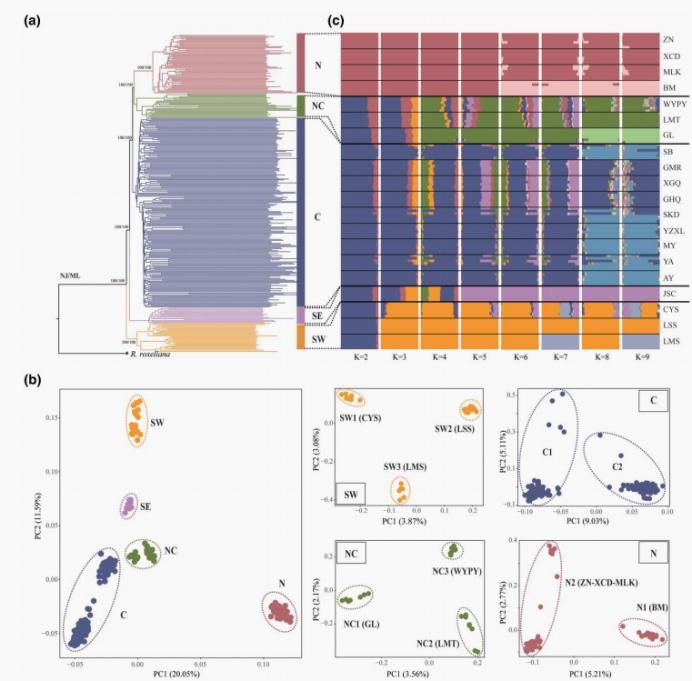
Figure. Genome-wide population genetic structure of Yunnan snub-nosed monkeys.
Project Solution
Leveraging its self-developed probe hybridization capture sequencing technology, iGeneTech provides customized sequencing solutions for wildlife conservation research. To address the challenges of high impurity levels and low host DNA abundance in fecal samples, this solution enables efficient enrichment of target loci and significantly improves the proportion of valid sequencing data. It fully supports genome-related research requirements for wild animals, including population genotyping and pathogenic mutation screening.
Technical Workflow of Liquid Assay Technology for Fecal Samples
1. Locus Screening and Integration
Perform joint screening of genome-wide background loci and functional loci, and integrate qualified loci into non-redundant target regions.
2. Probe Design and Synthesis
Probes are designed based on specificity and GC content with expected capture performance indicators provided. After confirmation, high-throughput synthesis and double-stranded DNA probe preparation are conducted.
3. DNA Extraction and Library Construction
Fecal nucleic acid extraction kits are recommended for DNA extraction and purification. Subsequently, genomic libraries are constructed via mild enzymatic digestion.
4. Hybrid Capture and Sequencing
Single or multiple hybridization strategies are recommended to increase sequencing data output. Optimized post-PCR cycle numbers are adopted to effectively improve capture efficiency.
Product Matrix
Product Name | Specifications (rxn) | Catalog No. |
TargetSeq® DNA Probes HT (Customized) | 96 | Customized |
TargetSeq One® Hyb & Wash Kit v3.0 with Eco Universal Blocking Oligo (for Illumina) | 96 | C11612 |
IGT® Enzyme Plus Library Prep Kit V3 | 96 | C11112 |
IGT® Adapter & 10 nt UDI Primer 1-768 (for Illumina, plate) | 768*1 rxn | C11282 |
References
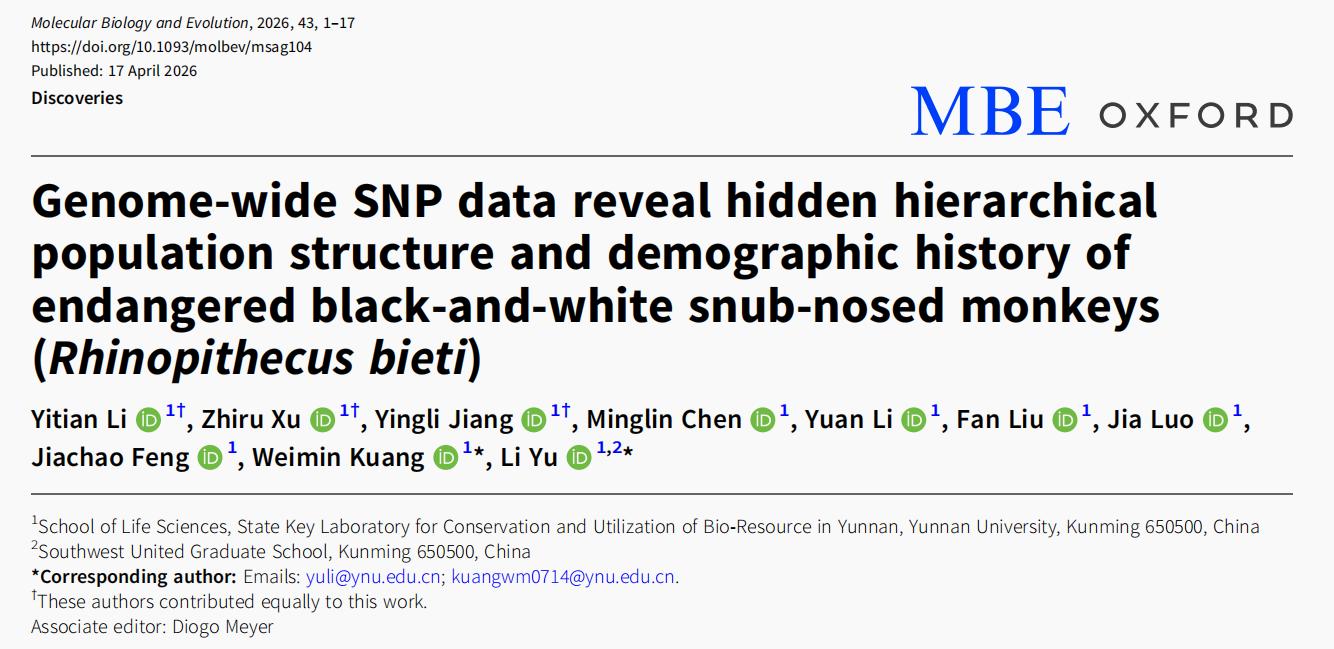
Li, Yitian et al. “Genome-wide SNP data reveal hidden hierarchical population structure and demographic history of endangered black-and-white snub-nosed monkeys (Rhinopithecus bieti).”Molecular biology and evolution vol. 43,5 (2026): msag104. doi:10.1093/molbev/msag104.
 CN
CN