Recently, the National Administration of Disease Prevention and Control (NADC) organized a specialized meeting on infectious disease prevention and control, clearly pointing out that winter and spring are the peak period for infectious diseases such as gastroenteritis. The occurrence of concurrent multiple symptoms can present a series of gastrointestinal (GI) syndrome manifestations.
Gastrointestinal syndrome refers to a clinical syndrome characterized by gastrointestinal dysfunction as the core manifestation, encompassing typical symptoms such as nausea, vomiting, abdominal pain, diarrhea, and mucopurulent stools. Its pathogenesis is closely associated with pathogenic microbial infection, abnormal host immune response, and environmental triggers.
In addition, the emergence of mixed infections (e.g., virus-bacteria synergistic pathogenesis) and emerging pathogens (e.g., novel norovirus variants) has further increased the complexity of etiological diagnosis.
Based on its independently developed TargetSeq® liquid-phase hybridization capture sequencing technology, iGeneTech has launched the 48-Common Pathogen Identification Panel for Gastrointestinal (GI) Syndrome, with reference to multiple strain sequences deposited in the NCBI database.
Among the targeted pathogens, 38 bacterial, fungal, and parasitic species are covered by probes designed following the principle of "intra-species conservation and inter-species specificity," while 10 viral species are targeted by probes designed for full-length coverage. A total of over 110,000 probes have been developed to cover 48 common gastrointestinal pathogenic organisms.
This Panel can enhance population-based gastrointestinal pathogen spectrum surveillance, providing crucial support for epidemic trend assessment, early outbreak detection, and risk analysis—fully meeting the needs of routine prevention and control work by disease control and prevention authorities.
Table 1: Pathogenic Microbial Species Covered by Gastrointestinal Syndrome Identification Probes
Viruses | Bacteria | Fungi | Parasites |
Norovirus | Salmonella spp. | Aspergillus fumigatus | Taenia solium |
Sapovirus | Pathogenic Escherichia coli | Candida albicans | Sarcocystis suihominis |
Human astrovirus | Campylobacter jejuni | Cryptococcus neoformans | Cryptosporidium spp. |
Human adenovirus | Mycobacterium avium complex (MAC) | Candida tropicalis | Entamoeba histolytica |
Rotavirus | Staphylococcus aureus | Candida glabrata | Cyclospora cayetanensis |
Poliovirus | Vibrio cholerae |
| Necator americanus |
Enterovirus | Bacillus cereus |
| Ancylostoma duodenale |
SARS coronavirus | Campylobacter fetus |
| Ascaris lumbricoides |
MERS coronavirus | Clostridioides difficile |
| Trichuris trichiura |
SARS-CoV-2 | Yersinia enterocolitica |
| Giardia lamblia |
| Helicobacter pylori |
| Taenia saginata |
| Campylobacter coli |
| Hymenolepis nana |
| Shigella spp. |
| Fasciolopsis buski |
| Yersinia pseudotuberculosis |
| Strongyloides stercoralis |
| Campylobacter lari |
|
|
| Klebsiella oxytoca |
|
|
| Clostridium perfringens |
|
|
| Aeromonas spp. |
|
|
| Plesiomonas shigelloides |
|
|
Experimental Workflow
1. Nucleic Acid Extraction (0.5h)
2. Library Preparation (2.5h)
3. Probe Capture (3h)
(Supplementary: Library-Probe Hybridization 0.5-1h)
4. Sequencing (3h)
5. Data Analysis
*The sequencing duration is calculated based on the GeneMind FASTASeq S series sequencers and SE100 sequencing strategy.
Product Advantages
01 Broad Sample Compatibility, No Culture Required
Supports multiple raw sample types including sewage, human, and environmental samples. Eliminates the need for pre-cultivation steps and host depletion, greatly simplifying the pretreatment process and significantly improving detection efficiency.
02 Broad Strain Coverage, Complete and Reliable Data
Based on efficient probe hybridization capture and enrichment technology, it enables accurate and unbiased identification and detection of sample genomes.
03 Excellent Sensitivity for Capturing Weak Signals
Addressing the core challenge of low-load infections, probe optimization achieves efficient binding and enrichment of target sequences. Even trace amounts of pathogenic nucleic acids can be stably captured, laying a solid foundation for subsequent high-sensitivity detection.
04 Efficient and Fast Hybridization Process
Powered by TargetSeq® liquid-phase hybridization capture technology, library-probe hybridization takes only 0.5-1 hour. Combined with rapid nucleic acid extraction, library preparation, and sequencing processes, it significantly shortens the detection cycle.
End-to-End Worry-Free Detection
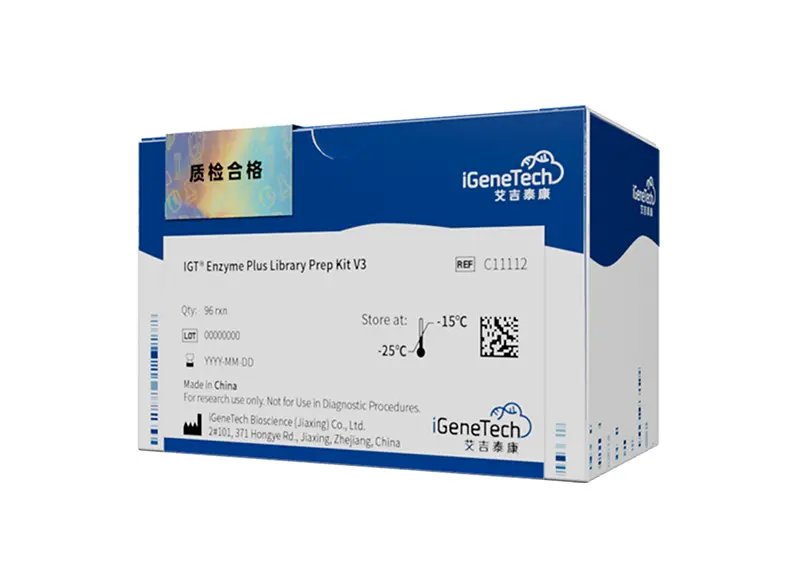
Adequate stock is available for the Gastrointestinal and Respiratory (GI & Resp.) Syndrome Identification Probe Kit. It is compatible with magnetic bead-based extraction kits, RNA pathogen library construction & capture kits, and DNA pathogen library construction & capture kits, enabling seamless connection from sample to data. The solution supports batch processing with automated liquid handling systems and is adaptable to multiple high-throughput sequencing platforms to meet the needs of various scenarios.
Product Info
Product Name | Speci. | Cat. No |
Gastrointestinal Syndrome Identification Panel | 16/96 rxn | PH2014811/PH2014812 |
Magnetic Beads Based Pathogen DNA / RNA Co-Extraction Kit | 50 rxn | E10021 |
IGT-AS12 Automated Liquid Handling Workstation | Configuration III | Q91013 |
 CN
CN