Research Briefing
A research team from Chongqing Medical University published a study titled "Detection of HBV DNA integration in plasma cell-free DNA of different HBV diseases utilizing DNA capture strategy" in the journal Virologica Sinica.
This study systematically demonstrated for the first time that the HBV-specific probe capture sequencing strategy enables high-precision, non-invasive detection of integration breakpoints between HBV and the host genome in plasma cell-free DNA (cfDNA) from patients with chronic hepatitis B (CHB), liver cirrhosis (LC), and even hepatocellular carcinoma (HCC).
iGeneTech was honored to design and synthesize specific capture probes covering multiple HBV genotypes (A–H) for this study.
Research Background: The Insurmountable "Integration" Gap
HBV integration into the hepatocyte genome is one of the major driving factors for the progression of chronic hepatitis B (CHB) to liver cirrhosis (LC) and hepatocellular carcinoma (HCC). Meanwhile, the integrated viral fragments can continuously transcribe and express hepatitis B surface antigen (HBsAg), which is a key obstacle to achieving "functional cure" (sustained loss of HBsAg) after antiviral treatment.
However, traditional detection of HBV integration mainly relies on invasive liver biopsy, which greatly limits its application in large-scale screening and long-term dynamic monitoring. Therefore, developing a highly sensitive non-invasive detection method to assess viral integration status has become an urgent need in the fields of hepatitis B management and early liver cancer screening.
Methodological Innovation: Accurately "Capturing" Viral Traces in Blood
The core breakthrough of this study lies in the establishment of an optimized DNA probe capture combined with high-throughput sequencing (Capture-NGS) workflow, which significantly improves the accuracy and sensitivity of detecting viral integration in plasma cfDNA, a low-concentration sample.
Strict Noise Filtering
The study adopted and improved the High-throughput Viral Integration Detection (HIVID) strategy. Through optimized bioinformatics analysis, especially the introduction of strict filtering criteria (e.g., normalized number of support unique sequences (nnsus, representing integration load) ≥ 0.7 and number of support unique sequences (nsus) ≥ 3), background noise was effectively eliminated, ensuring the specificity of detection.
Performance Validation
Compared with the traditional HIVID method, the optimized strategy showed higher accuracy (96.8% vs 70.0%) and positive predictive value (PPV 93.3% vs 73.7%) in artificially chimeric DNA samples.
Ability to Detect Early Integration Events
In an in vitro cell model (HBV-infected HepG2-NTCP cells), this method could detect integration events as early as day 1 post-infection, indicating its suitability for detecting the early integration process of viral infection.
Key Research Findings: Integration Load Correlates with Liver Cancer Progression
The research team systematically analyzed plasma cfDNA from 25 HBsAg-positive and HBeAg-negative patients (CHB, LC, HCC).
1. Clinical Applicability and High Positive Rate
Widespread detection: HBV integration breakpoints were successfully detected in 22 out of 25 patients (88%) plasma cfDNA samples. A total of 333 integration breakpoints were identified, confirming the high feasibility of this method in clinical samples.
2. Association Between Integration Load and Disease Progression
Significantly elevated load in HCC: The nnsus of HCC patients was significantly higher than that of CHB and LC patients (P < 0.05). This suggests that integration load may be a powerful biomarker reflecting the severity of disease progression.
3. Integration Characteristics and Carcinogenic Mechanisms
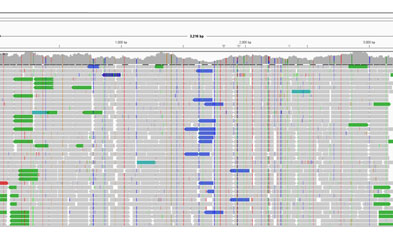
Viral integration sites: HBV integration breakpoints were significantly enriched near nt1800 of the viral genome, supporting the theory that "double-stranded linear DNA (dslDNA)" is the main substrate for integration in vivo. Integration breakpoints were randomly distributed on human chromosomes, but notably, more than 60% (61.86%) of the breakpoints were located in gene-coding regions, suggesting that HBV integration may affect host gene function through insertional mutagenesis. For example, the study found cases where HBV DNA sequences were inserted into the coding region of the liver cancer-related gene KMT2B, which may lead to abnormal expression and drive tumorigenesis.
Integration mechanisms: Integration involves two major DNA repair mechanisms: "non-homologous end joining (NHEJ)" and "microhomology-mediated end joining (MMEJ)".
Clinical Implications and Future Outlook
This study opens a new "liquid biopsy" pathway for HBV infection management and liver cancer prevention and treatment.
1. Non-Invasive Liver Cancer Risk Assessment
HBV integration load in cfDNA is expected to become a non-invasive early warning indicator for predicting the progression of CHB patients to HCC. Once its prognostic value is confirmed by large-scale prospective studies in the future, it will greatly change the current early screening and monitoring strategies for liver cancer.
2. Monitoring Tool for Antiviral Efficacy
Since integrated HBV is one of the main reasons for the sustained presence of HBsAg, this method can serve as a promising non-invasive tool for dynamically evaluating the actual efficacy of novel antiviral therapies (such as drugs targeting integrated DNA or cccDNA).
3. Methodological Promotion Value
The strategy of Capture-NGS combined with strict bioinformatics filtering provides a replicable and promotable technical paradigm for non-invasive integration research between other viruses (such as HPV, HIV) or pathogens and the host genome.
This study systematically depicts the HBV integration landscape in plasma cfDNA of patients at different liver disease stages for the first time, marking a key and solid step towards achieving precise, non-invasive monitoring of HBV infection and early intervention of liver cancer.
Original Link: https://www.sciencedirect.com/science/article/pii/S1995820X24000828?via%3Dihub
Product Info
Product Name | Speci. | Cat. No |
HBV Panel | 16 rxn / 96 rxn | PH2001301 / PH2001302 |
IGT® DNA Pathogen Microbial Library Prep & Capture Kit (Illumina) | 16 rxn | C11361 |
IGT® DNA Pathogen Microbial Library Prep & Capture Kit (MGI) | 16 rxn | C11431 |
Magnetic Beads Based Pathogen DNA / RNA Co-Extraction Kit | 50 rxn | E10021 |
Magnetic Bead Method Pathogenic DNA/RNA Extraction Kit | 50 rxn | E20011 |
 CN
CN