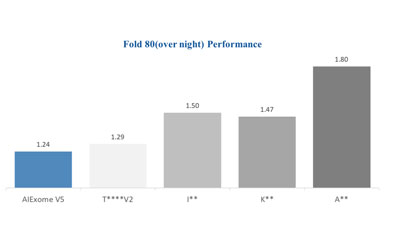
In summer, mosquitoes are active, and it's not just dengue and chikungunya.
As summer arrives, vector organisms such as mosquitoes, ticks, and rodents become highly active. Beyond dengue virus (DENV) and chikungunya virus (CHIKV), arboviruses and rodent-borne viruses like yellow fever virus (YFV), Zika virus (ZIKV), severe fever with thrombocytopenia syndrome virus (SFTSV), and hantavirus (HAN) also enter their peak transmission period. These viruses have diverse transmission routes and complex symptoms, yet they all pose severe challenges to public health.
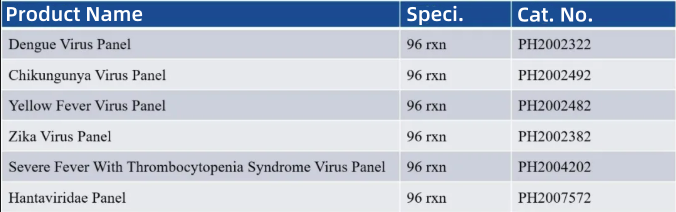
Based on surveillance data and prevention/control guidelines from the National Administration of Disease Prevention and Control and the World Health Organization (WHO), iGeneTech, building on its detection solutions for dengue and chikungunya, has launched a comprehensive solution for accurate multiplex virus detection. This helps disease control institutions and research units achieve "early detection, early tracing, and early prevention and control."
iGeneTech's Multiplex Virus Detection Solution: One Technology with Multiple Capabilities to Tackle Complex Arboviral Threats
In response to the detection needs of the aforementioned arboviruses, iGeneTech, leveraging its independently developed TargetSeq® liquid-phase probe hybridization capture technology with independent intellectual property rights and unique microbial probe design schemes, is committed to solving key issues such as viral mutation monitoring, detection of low-abundance viral samples, and host tracing. Currently, it has launched multiple whole-genome detection kits for arthropod-borne pathogens.
Core advantages are as follows:
1. Customized probe design, covering the entire genome
Specific probes are designed respectively for Yellow Fever Virus, Zika Virus, SFTSV, and Hantavirus (11,935 for Yellow Fever Virus, 8,723 for Zika Virus, 3,700 for SFTSV, and 48,191 for Hantavirus). With reference to global multi-strain whole-genome sequences in the NCBI database, high inclusivity for variant strains is ensured.
Compared with traditional multiplex amplification technology: There is no need to frequently update probes due to viral mutations, and new prevalent strains can also be efficiently captured, meeting the needs of tracing and evolutionary analysis.
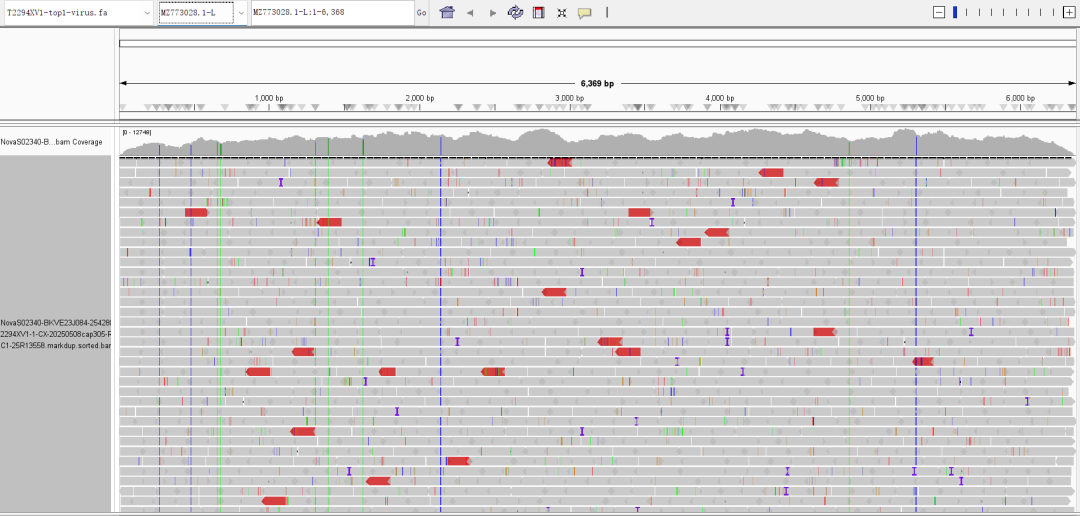
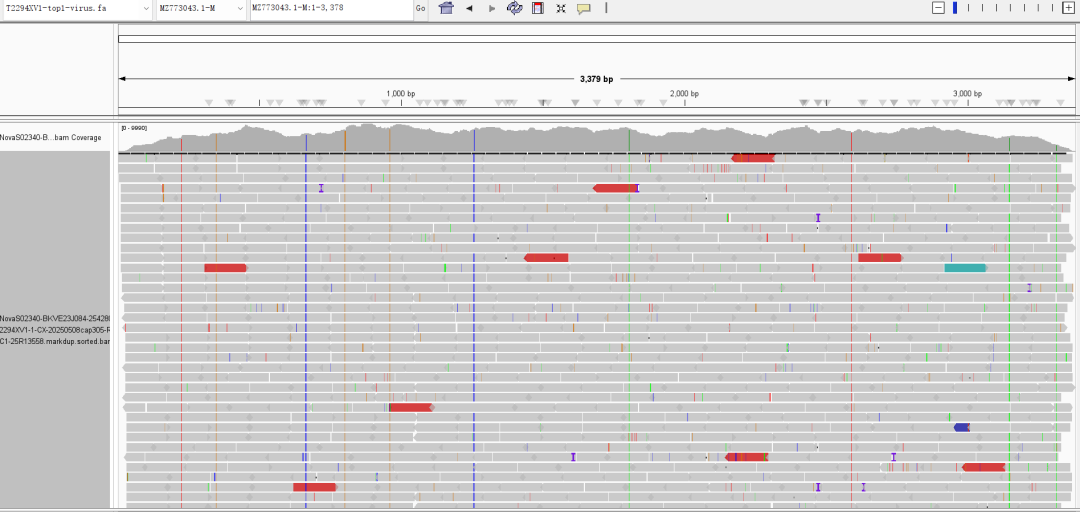
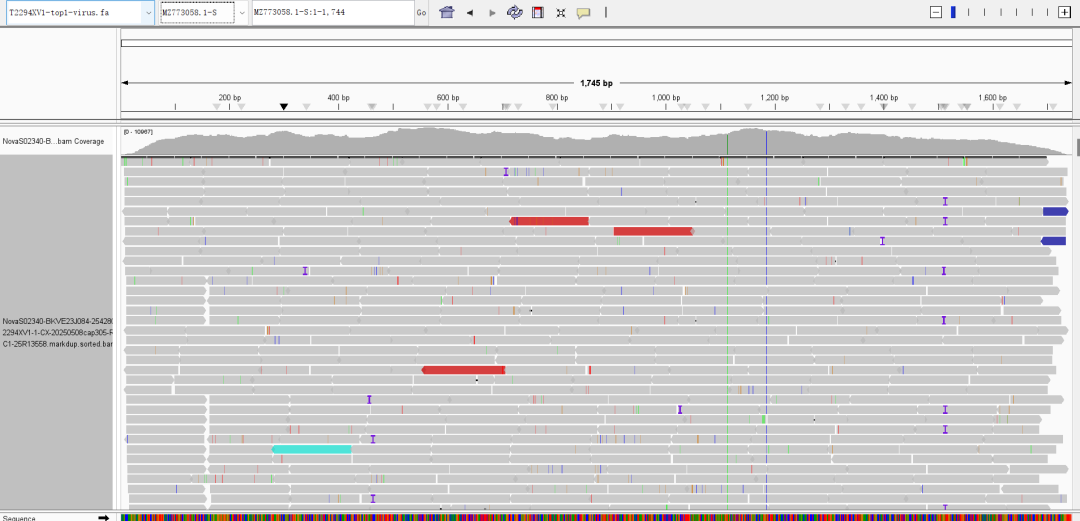
SFTSV Experimental Data IGV Performance
L Segment
M Segment
S Segment
2. Comprehensive workflow solution, adaptable to diverse scenarios
Sample processing: The magnetic bead-based pathogenic DNA/RNA co-extraction kit (catalog number: E20011) can efficiently remove host nucleic acids, improving virus detection rates, and is particularly suitable for low-titer samples (such as early-stage infections, pregnant women's blood).
Automation and high throughput: Equipped with the IGT-AS12 automated liquid handling workstation, it supports batch processing of 96-well plates, is compatible with mainstream sequencing platforms such as Illumina and MGI, and can complete the detection of hundreds of samples per day.
Customized services: Probe combinations can be adjusted according to customer needs (e.g., detection of region-specific prevalent strains, co-infections), with "one-on-one" technical support provided.
The risk of arboviral transmission persists in summer. Whether it is fever after returning from travel to tropical regions or being bitten by ticks in mountainous areas, accurate detection is needed to identify the cause.
iGeneTech's multiplex virus detection solution, covering everything from single virus to co-infections, and from basic detection to in-depth tracing, comprehensively meets the needs of public health prevention and control as well as scientific research.
 CN
CN