Introduction
iGeneTech has launched a whole-genome capture probe detection solution for severe acute respiratory syndrome coronavirus 2 (SARS-CoV-2). Compatible with both manual and automated workflows and a wide range of sample types, this system delivers high-precision viral subtyping and phylogenetic tracing.
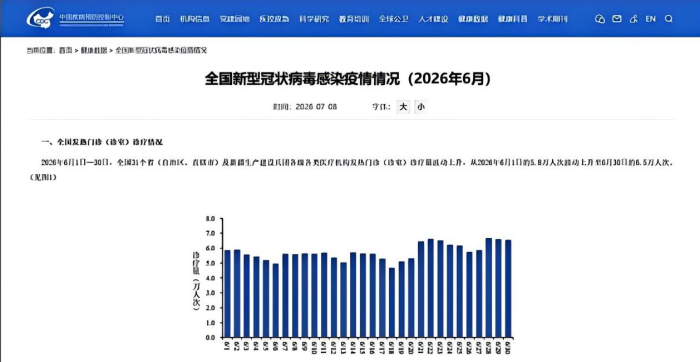
National SARS-CoV-2 Infection Surveillance Data (June 2026)
Background
Data monitored by the World Health Organization (WHO) shows that Omicron sublineages of SARS-CoV-2 continue to circulate across multiple countries and regions worldwide. In July 2026, COVID-19 once again trended on social media platforms.
Data released by the Chinese Center for Disease Control and Prevention (China CDC) in July indicated 79,000 newly confirmed COVID-19 cases nationwide in June 2026, including 130 severe cases and 1 fatality (the patient passed away from aggravated underlying conditions combined with SARS-CoV-2 co-infection). The dominant circulating strain belonged to the NB.1.8.1 lineage.
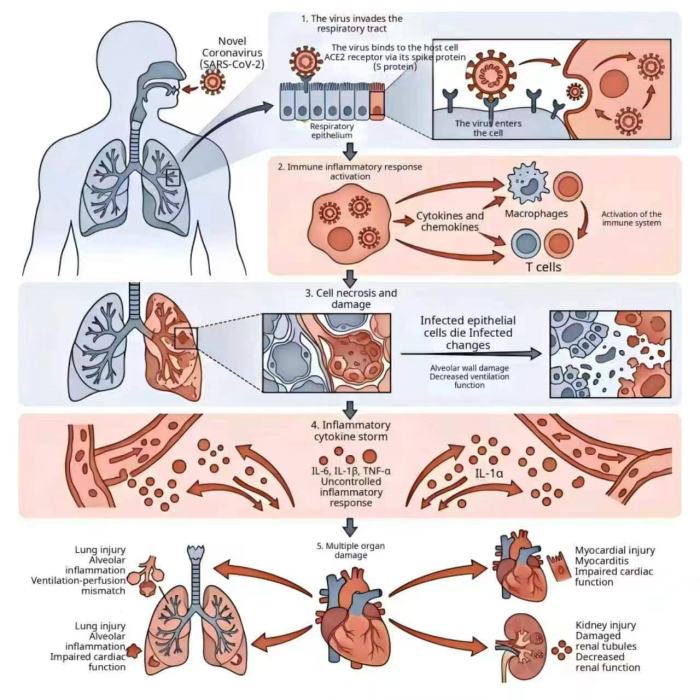
Figure 1 Pathogenesis diagram of SARS-CoV-2 infection
Against the backdrop of persistent transmission and genomic evolution of SARS-CoV-2, iGeneTech developed its in-solution hybridization capture kit for SARS-CoV-2, powered by the self-developed TargetSeq® in-solution probe capture technology.
Drawing on 3,045,955 full-length SARS-CoV-2 genome sequences archived in the NCBI public database as target templates, we adopted a high-density tiling design strategy to build a capture probe library containing 11,547 strain-specific probes. This design achieves efficient full-genome enrichment and precise capture of SARS-CoV-2 nucleic acids.
This technology sensitively detects emerging viral mutations during sustained transmission, empowering public health surveillance with high-resolution variant monitoring and source attribution—a critical technical foundation for precision epidemic control.
SARS-CoV-2 Whole-Genome Capture Performance Data
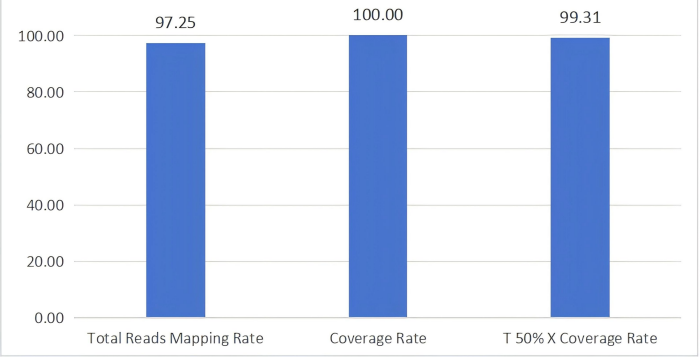
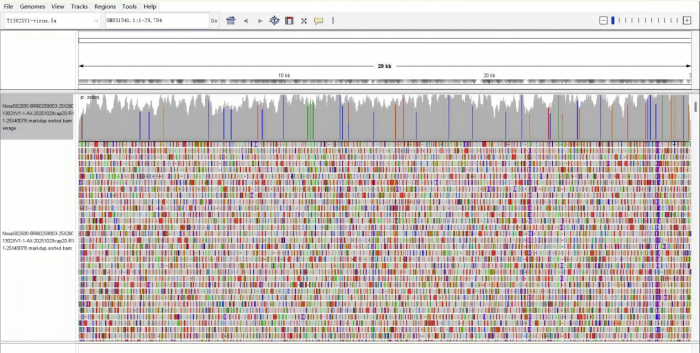
Figure 2 SARS-CoV-2 Whole-Genome Capture Test Results
Automated Workflow Solution
iGeneTech independently developed an automated workstation reagent system (Figure 3). The platform supports independent rapid processing of single samples, and flexible throughput scaling via multi-unit matrix deployment to minimize manual labor drastically.
Users only need to load extracted nucleic acid, capture probes, and Index barcodes into pre-integrated reagent strips; the system completes all downstream procedures automatically without manual intervention, meeting laboratory demands for flexible operation and ultra-short report turnaround times.
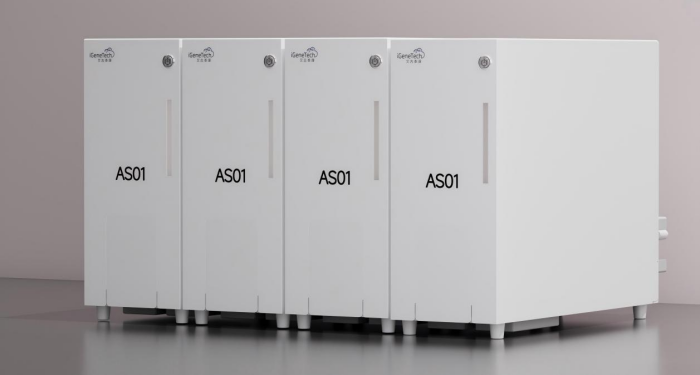
Figure 3 Schematic Diagram of Automated Liquid-Handling Workstation
Based on the pathogen microorganism whole-genome automated analysis pipeline independently developed by iGeneTech (Figure 5), quality control is performed on raw off-machine sequencing data. The remaining reads are then aligned against the pathogen reference database. Reads mapped to target pathogens are extracted for reference-free assembly. The top-1 strain is selected according to the read count to serve as the reference sequence for reference-guided assembly, and a consensus sequence is generated in the end.
Automated Pathogen Whole-Genome Bioinformatic Pipeline
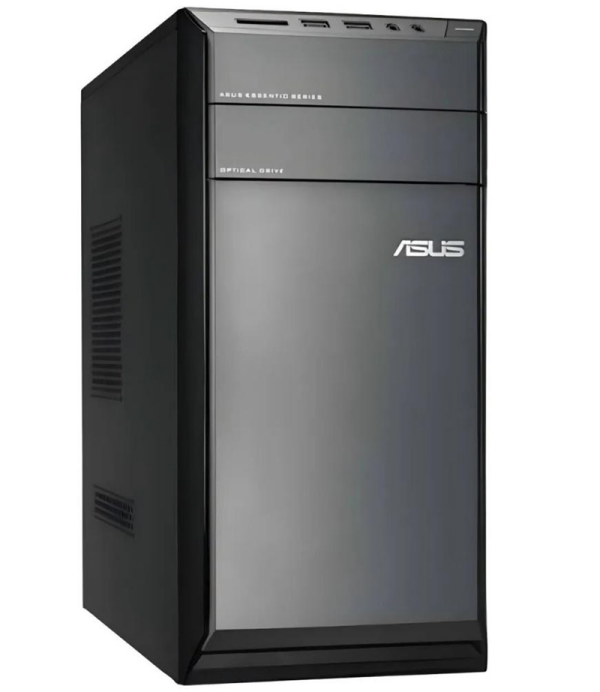
Figure 4 Schematic of the Pathogen Analysis Integrated Workstation
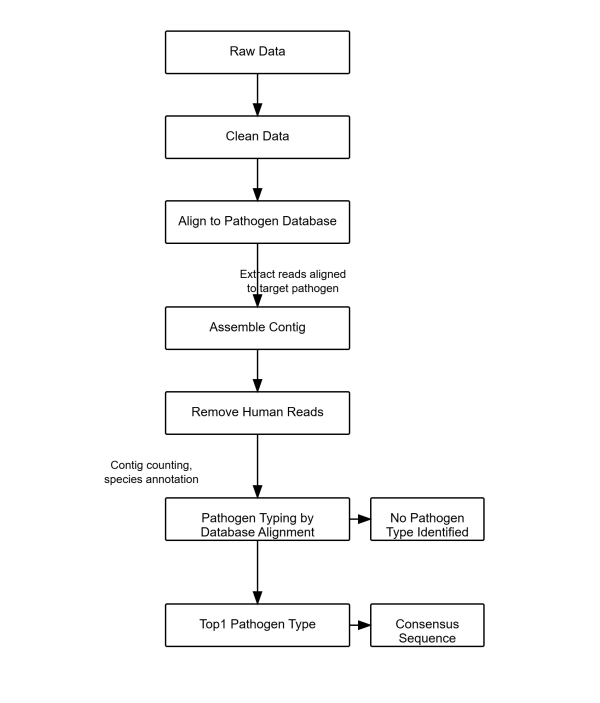
Figure 5 Schematic Workflow of the Pathogen Analysis All-in-One Instrument
Product Advantages
Broad Spectrum & High Sensitivity, Stable & Accurate Results
Full-genome coverage of target pathogens; optimized probe design enables consistent capture of trace pathogen nucleic acids, paired with efficient hybridization enrichment for complete, uniform genome coverage.
Simplified Workflow & High Operational Efficiency
Compatible with diverse sample matrices: wastewater, human clinical specimens (stool, anal swabs, vomitus), environmental swabs, etc. No pre-cultivation or separate host DNA depletion required. Combined with automated equipment, it streamlines pre-processing and shortens overall testing turnaround time.
Fully Integrated End-to-End System, Unattended Batch Processing
All library construction and capture reagents are pre-integrated into single-use strips. Each sample runs independently with one-strip-one-sample workflow; multi-machine parallel expansion supports customizable throughput to match laboratory testing volume.
Independent Reaction Chambers to Prevent Cross-Contamination, Compact Footprint for Strict Biosafety Labs
Physically isolated reaction compartments eliminate cross-sample contamination risks. The equipment occupies only 0.1 m² of bench space and fits directly inside biosafety cabinets, satisfying stringent biosafety level requirements for infectious pathogen testing.
Complete End-to-End Testing Support
SARS-CoV-2 whole-genome capture probe kits are maintained in sufficient inventory. Working with magnetic bead nucleic acid extraction kits and RNA pathogen library construction capture kits to form a seamless workflow from raw sample to final genomic data. The system is compatible with automated workstation and multiple mainstream high-throughput sequencing platforms to fit diverse laboratory scenarios.
Full Product Matrix (From Nucleic Acid Extraction to Genomic Detection)
Product Name | Spec. | Catalog No. |
SARS-CoV-2 Panel | 16 rxn 96 rxn | PH2001721 PH2001722 |
Magnetic Bead Based Pathogen DNA/RNA Co-Extraction Kit | 50 rxn | E10021 |
Magnetic Bead Based Pathogen DNA/RNA Co-Extraction Kit (Host Removal) | 50 rxn | E20011 |
iGeneTech RNA Pathogen Library Construction & Capture Kit (Illumina) | 16 rxn | C12061 |
iGeneTech RNA Pathogen Library Construction & Capture Kit (MGI) | 16 rxn | C12071 |
iGeneTech Universal DNA & RNA Pathogen Co-Library Construction Capture Kit (Illumina) | 16 rxn | C12021 |
iGeneTech Universal DNA & RNA Pathogen Co-Library Construction Capture Kit (MGI) | 16 rxn | C12031 |
IGT-AS01 Automated Workstation | Unit | Q91020 |
Pathogen Microorganisms Data Analysis Workstation | Unit | 7020MT PLUS |
Conclusion
iGeneTech is committed to delivering comprehensive, multi-layered, multi-scenario pathogen detection solutions. We leverage technological innovation to empower infectious disease surveillance, scientific research, and epidemic prevention & control decision-making.
 CN
CN