Lead-in
iGeneTech has launched a whole-genome capture probe detection panel for the Ebolavirus genus. Supporting manual and automated workflows and compatible with multiple sample types, this solution delivers high-efficiency and accurate detection, genotyping and traceability.
Background
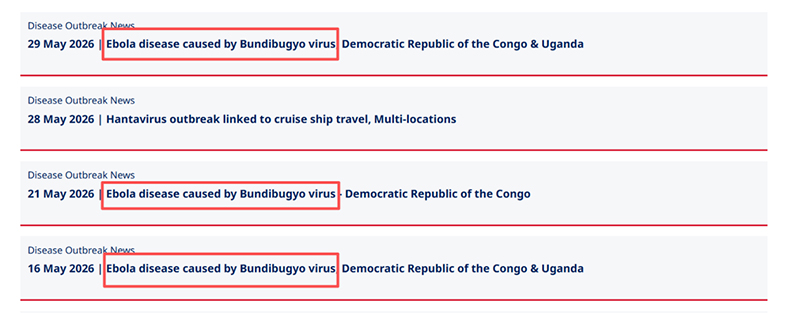
On 5th May 2026, the World Health Organization (WHO) received an alert of an unknown disease reported in the Democratic Republic of the Congo (DRC). On 15th May, the outbreak was confirmed as Bundibugyo virus disease (BVD).
As of 21st May, the DRC had reported 746 suspected cases with 176 deaths, including 83 confirmed cases and 9 fatalities.
As of 29th May, a total of 906 suspected cases (223 deaths) and 134 confirmed cases (18 deaths) were reported. The rapid surge of cases in a short period and continuous epidemic spread have created severe challenges for local epidemic prevention and control.
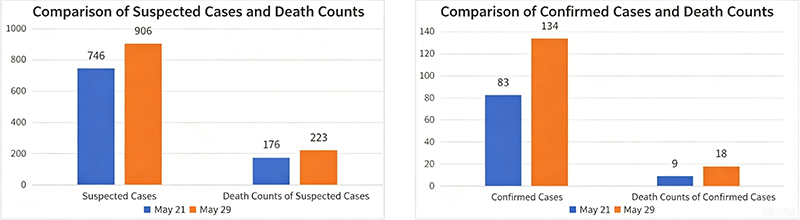
Figure 1 Comparison of Infections in Ebolavirus Outbreaks
Bundibugyo virus belongs to the genus Ebolavirus in the family Filoviridae. It was first identified in the Bundibugyo district of Uganda in 2007. Fruit bats serve as its primary natural reservoir. Human-to-human transmission occurs via contact with patient body fluids and contaminated equipment.
After entering the human body through the skin and mucous membranes, the virus specifically invades macrophages and dendritic cells, suppressing the host’s innate immune response. Massive viral replication subsequently damages vascular endothelial cells, leading to drastically increased vascular permeability, tissue edema and multi-organ injury.
With the onset of a cytokine storm, patients are prone to systemic hemorrhage, shock and multiple organ failure. The incubation period ranges from several days to three weeks. The main clinical manifestations include high fever, vomiting, diarrhea, internal and external bleeding, accompanied by a high fatality rate.
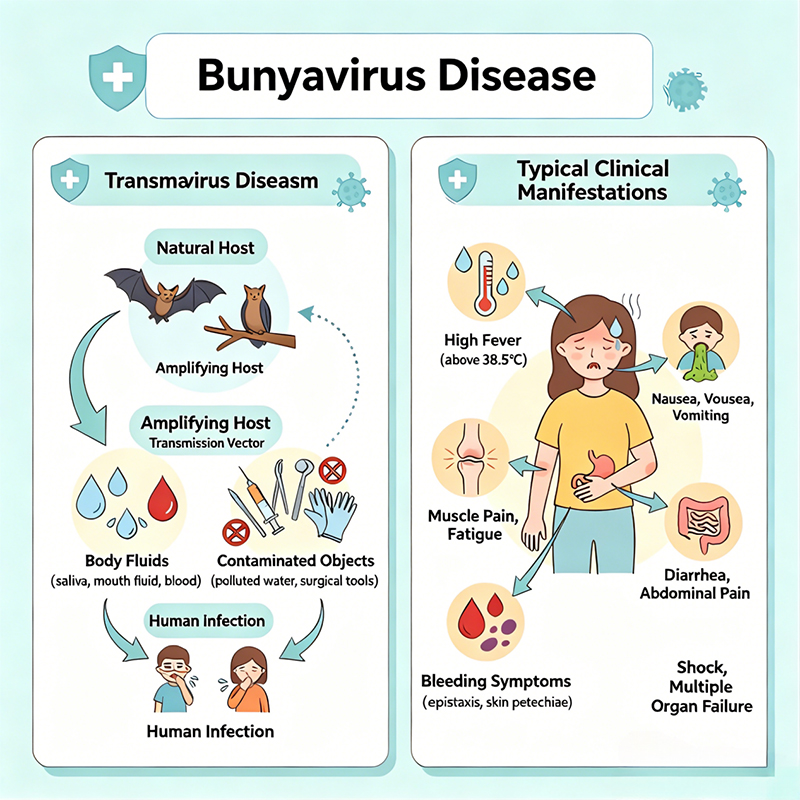
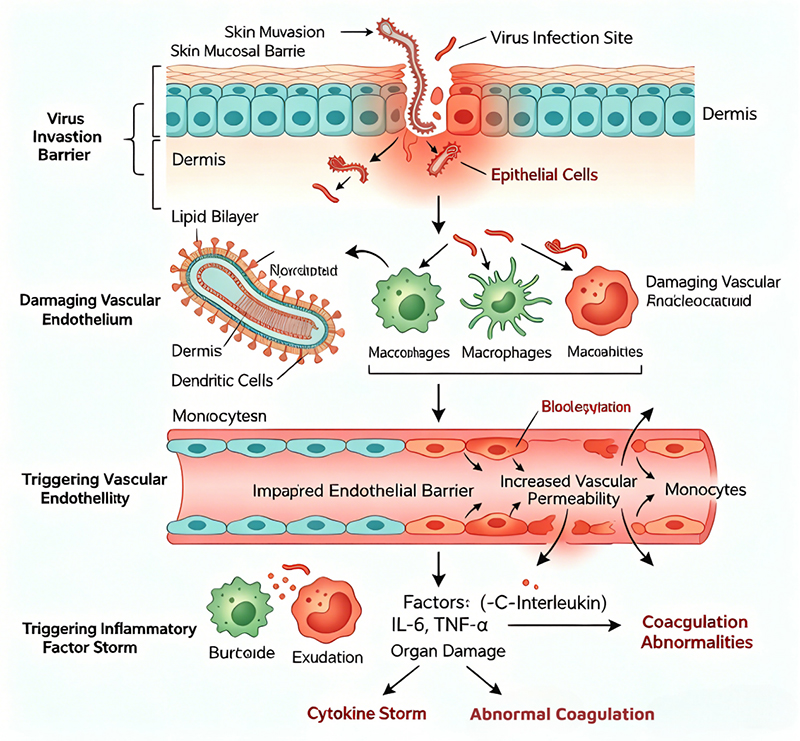
Figure 2 Bandibujiao Virus: Transmission Routes & Pathogenesis Schematic
Based on its independently developed TargetSeq® liquid-phase probe capture technology, iGeneTech has developed a liquid-phase hybridization capture kit for Ebolavirus. Target regions were defined using full-length genomic sequences deposited in the NCBI database over the past 20 years. Referencing a total of 4,005 sequences, we designed 10,394 specific probes, which can cover all six Ebolavirus subtypes in a single reaction.
Panel
S/N | Product Name | Species Name |
T3882XV1 | Orthoebolavirus Panel | Orthoebolavirus bombaliense |
Orthoebolavirus bundibugyoense |
Orthoebolavirus zairense |
Orthoebolavirus restonense |
Orthoebolavirus sudanense |
Orthoebolavirus taiense |
Automated Workflow
iGeneTech's self-developed Reagent Strip Solution for Automated Workstations (Figure 3) enables rapid and independent processing of individual samples. Meanwhile, throughput can be flexibly scaled up via a multi-unit matrix configuration, drastically reducing manual operations. Simply add post-extraction nucleic acids, capture probes and Index sequences into the reagent strips, and the entire workflow will run automatically without further human intervention. This solution fully meets laboratory requirements for operational flexibility and ultra-short turnaround time for test reports.
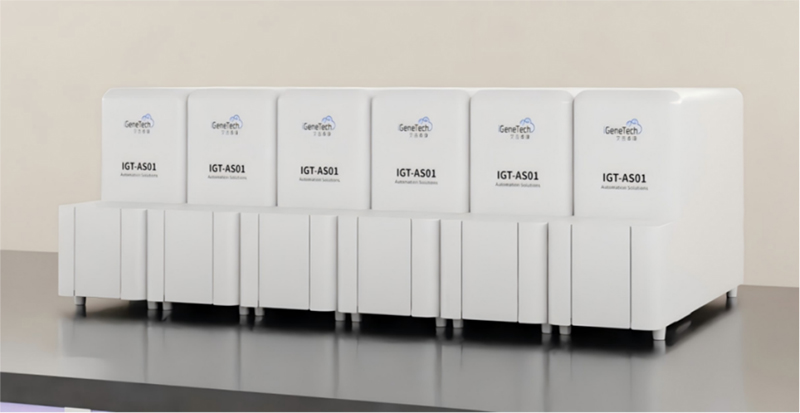
Figure 3 Schematic of AS01 Automated Workstation
Based on iGeneTech’s self-developed automated whole-genome analysis pipeline for pathogenic microorganisms (Figure 5), quality control is performed on the off-machine sequencing raw data. The remaining reads are then mapped against the pathogen reference database. Reads mapped to the target pathogen are extracted and subjected to de novo assembly. The top 1 strain ranked by read count is selected as the reference sequence for reference-guided assembly, and a consensus sequence is finally generated.
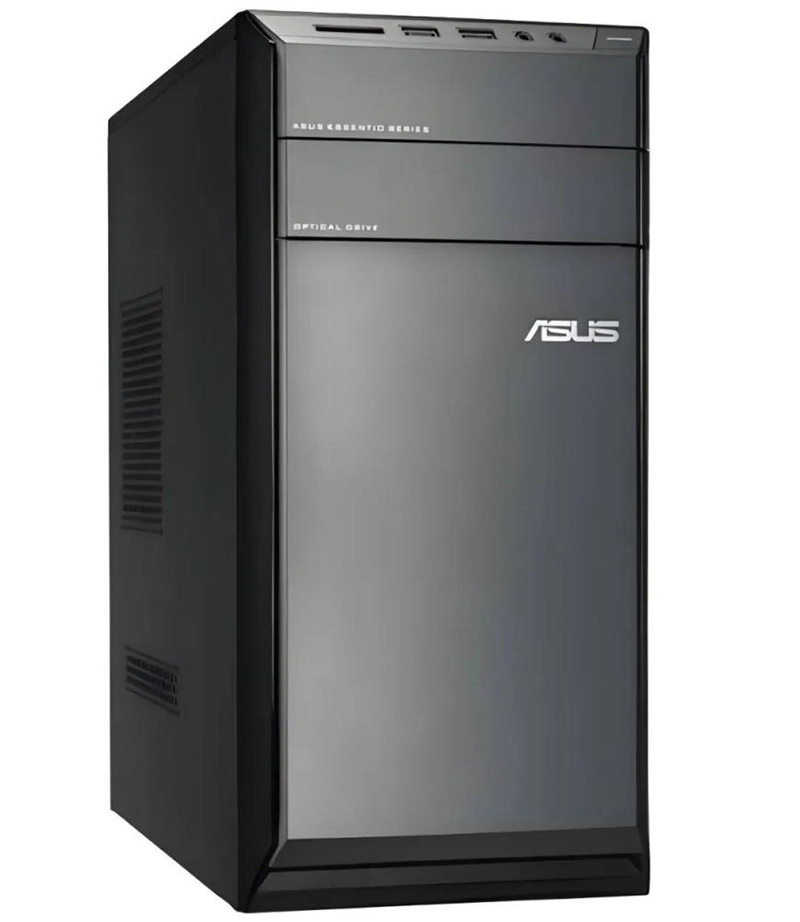
Figure 4 Schematic of the Pathogen Analysis Integrated Workstation
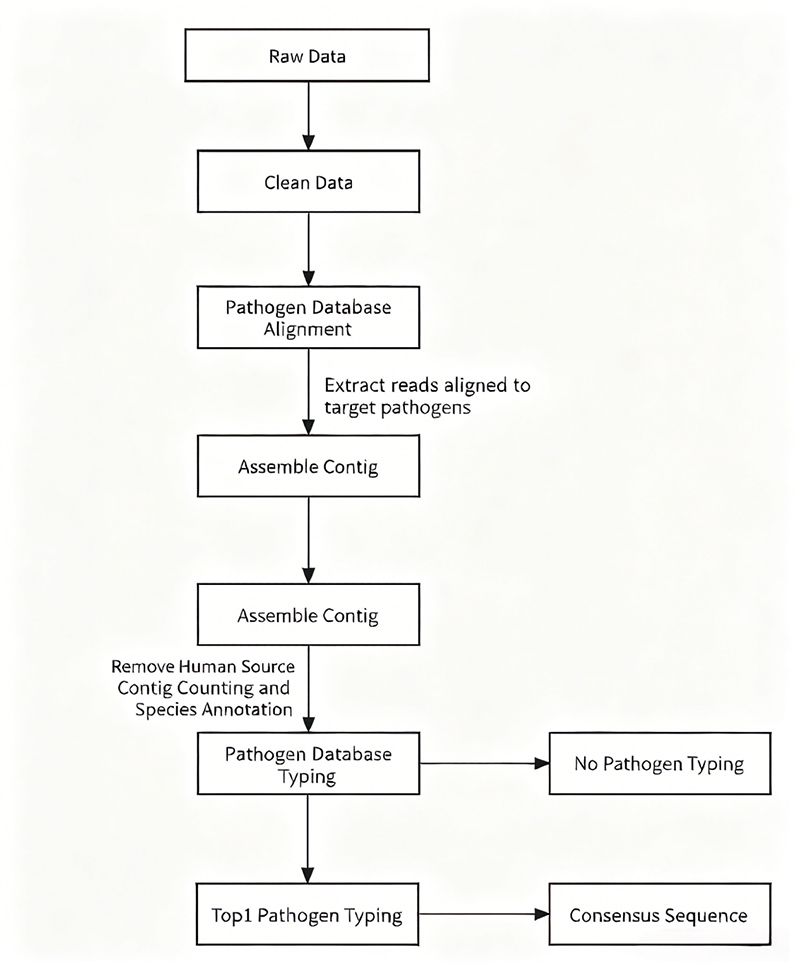
Figure 5 Schematic Workflow of the Pathogen Analysis All-in-One Instrument
Product Advantages
01 Broad-spectrum, Efficient, Precise & Reliable.
Full genomic coverage of pathogens is achieved through optimized probe design that enables stable capture of trace pathogen nucleic acids, combined with efficient hybrid enrichment technology for precise whole-genome coverage.
02 Streamlined Process, High Efficiency & Ease of Use
Supports multiple sample types, including sewage, human specimens (stool, anal swabs, vomit), and environmental samples. Eliminates pre-cultivation and host DNA depletion. Coupled with automated workflows, it greatly simplifies pre-processing and shortens detection turnaround time.
03 Highly Integrated Full Workflow, Unattended On-Demand Testing
Integrated reagent strips integrate library construction and capture; single samples run independently with sample-in library-out workflow. multi-machine matrix scaling is supported to accommodate flexible throughput requirements.
04 Physical Isolation Against Contamination, Compact Deployment For Harsh Environments
Independent reaction units prevent cross-contamination. The compact unit occupies only 0.1 m² of floor space and fits directly inside biosafety cabinets to meet high-level biocontainment requirements.
Product Matrix
Product Name | Specifications (rxn) | Catalog No. |
Orthoebolavirus Panel | 16/96 | PH2020211
PH2020212 |
Magnetic Bead-Based Pathogen DNA/RNA Co-Extraction Kit | 50 | E10021 |
Magnetic Bead-Based Pathogen DNA/RNA Co-Extraction Kit (Host Depletion) | 50 | E20011 |
IGT® RNA Pathogen Library Construction & Capture Kit (Illumina/MGI) | 16 | C11371/
C11441 |
IGT-AS12 Automated Liquid Handler (Configuration 3) | Configuration 3 | Q91013 |
 CN
CN